Key Takeaways
- Forklift safety relies on consistent daily habits, not a one-time lesson.
- Clearly separating pedestrians and equipment reduces preventable collisions.
- Pre-shift inspections can identify equipment defects before work begins.
- Near misses should lead to practical improvements, not blame.
- Refresher coaching is especially important after changes, unsafe behavior, or time away from operating.
- Technology can support safe work, but it cannot replace alert people and sound procedures.
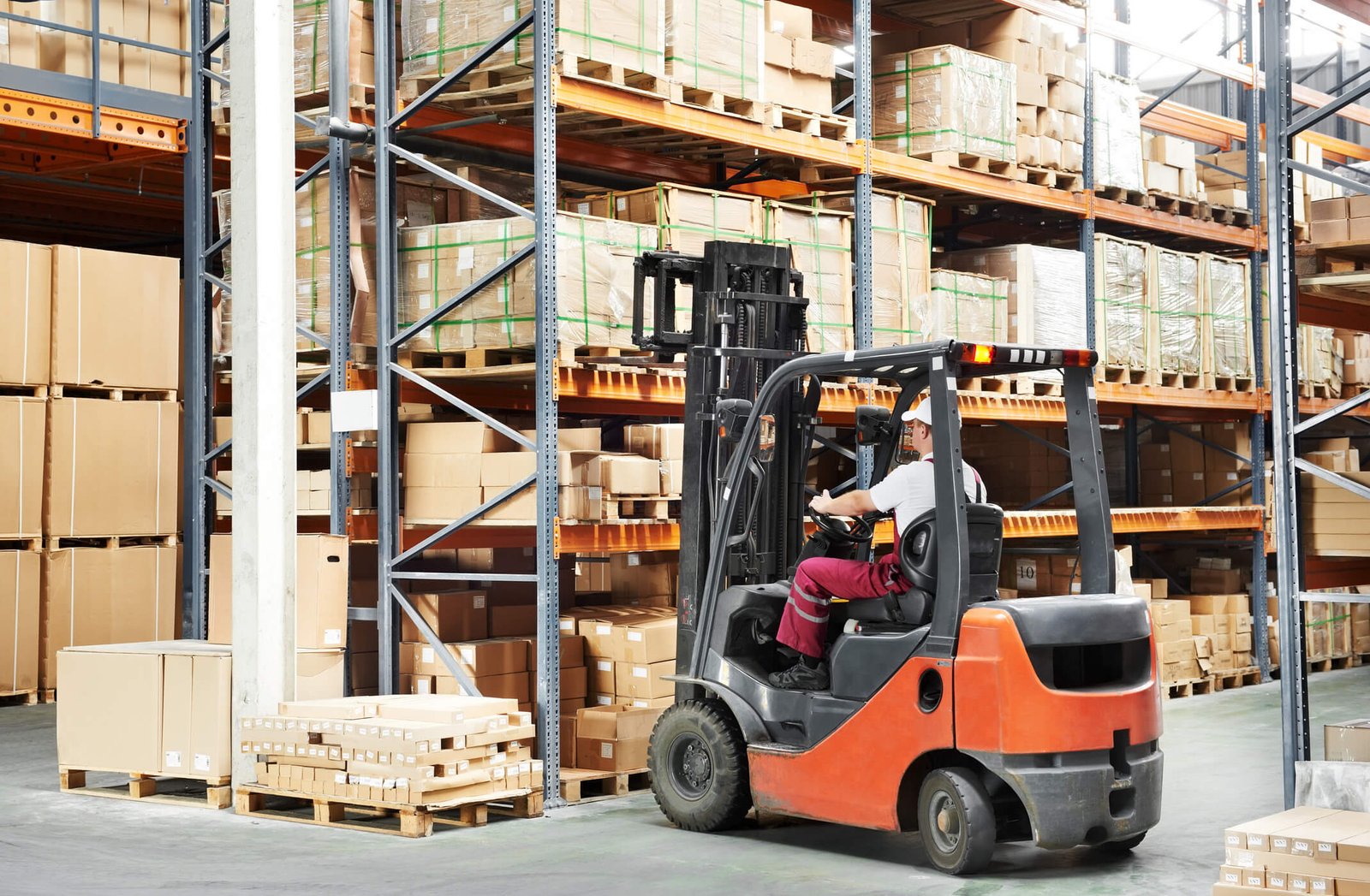
Busy warehouses demand steady attention to forklift safety. Operators may be moving pallets, loading trailers, navigating tight aisles, and working near pedestrians during the same shift. Strong forklift training helps workers understand the basics, but safe results also depend on how those lessons are applied in crowded, loud, or rushed warehouse conditions.
The safest facilities treat forklift safety as part of normal operations. They plan traffic routes, inspect equipment, communicate clearly, and correct minor issues before they lead to injuries, product damage, or costly downtime.
Why Forklift Safety Needs Daily Attention
Forklifts operate in shared spaces where people, racks, pallets, dock equipment, and vehicles compete for room. A blocked aisle, an unstable load, poor lighting, or a worker stepping around a blind corner can quickly create a dangerous situation. Rushing to meet shipping deadlines can make these risks worse.
Daily safety attention matters because conditions change from shift to shift. A temporary storage area may narrow a travel lane. A new employee may not understand the traffic pattern. A damaged pallet may create an unstable load. Good safety programs expect those changes and give workers a clear way to respond.
Keep exploringUnderstanding What Makes a Business Valuable Beyond the Numbers
Build a Simple Warehouse Traffic Plan
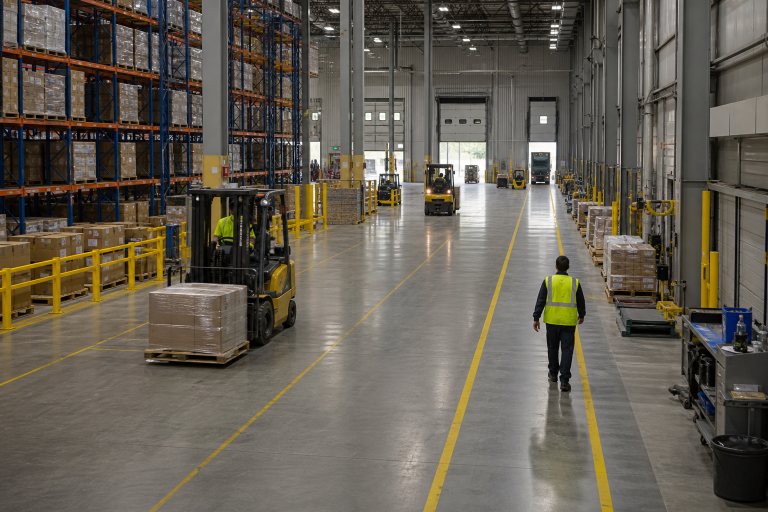
A traffic plan does not need to be complicated to be useful. Start by identifying where forklifts travel, where pedestrians work, and where the two paths may cross. Mark forklift lanes and pedestrian walkways with visible floor markings, then keep those routes clear throughout the day.
- Place mirrors, stop points, warning signs, and barriers near blind corners.
- Use gates, rails, or bollards to separate people from equipment where possible.
- Set lower speeds near dock doors, cross aisles, workstations, and congested areas.
- Keep emergency exits, fire equipment, and access routes free of pallets and supplies.
- Review traffic flow whenever racks, storage zones, schedules, or production areas change.
Make Pre-Shift Checks a Real Safety Step
Inspections should be active checks, not paperwork completed in a hurry. Before operating, workers should inspect the forklift and test the controls that affect safe operation. OSHA provides practical guidance on common hazards associated with powered industrial trucks and solutions, including risks related to visibility, loading, maintenance, and pedestrian contact.
- Check tires, forks, chains, mast components, and overhead guards.
- Test steering, brakes, horn, lights, alarms, and other warning devices.
- Look for fluid leaks, loose parts, damaged guards, or unusual sounds.
- Confirm that the seatbelt or restraint system works properly.
- Make sure the capacity plate is readable and appropriate for the planned load.
- Tag defective equipment and remove it from service until qualified repairs are complete.
Use Better Communication Around Forklifts
Pedestrians should never assume an operator has seen them. Before crossing a forklift route, workers should make eye contact or receive a clear signal from the operator. Operators should slow down and use the horn at blind intersections, obstructed doorways, and other areas with limited visibility.
Loading and unloading work also needs a consistent communication method. Hand signals, radios, or designated spotters can help, but everyone must understand what each signal means. When a signal is unclear, the forklift should stop until the situation is confirmed. Workers should never walk under raised forks or enter a turning area without the operator’s acknowledgment.
Handle Loads With Care
Many forklift incidents begin with a load that is poorly positioned, too heavy, damaged, or difficult to see around. Center loads on the forks, keep them within the truck’s rated capacity, and travel with the load as low as practical. If the load blocks forward visibility, travel in reverse when conditions allow or use a spotter.
Keep exploringStarting a Business Without Stock: The Quiet Rise of Zero-Inventory Thinking
- Slow down before turning, especially with tall, wide, or uneven loads.
- Do not move damaged pallets or store unstable materials in racks.
- Keep forks low while traveling and avoid sudden stops or sharp turns.
- Never use forks or makeshift platforms to lift people.
Reduce Blind-Spot and Pedestrian Risks
Blind corners, rack ends, dock entrances, trailer openings, and cross aisles deserve extra controls. Convex mirrors can improve sightlines, while physical barriers can keep pedestrians out of active equipment routes. Visitors, office staff, and temporary workers should receive basic site instructions before entering warehouse areas.
Operators should reduce speed near obstructed views and stop when they cannot safely confirm the path ahead. The same principle applies to pedestrians. If they cannot see an approaching forklift, they should wait at a controlled crossing rather than stepping into the lane.
Refresh Skills When Conditions Change
Experienced operators can develop shortcuts when work feels routine. Refresher instruction is valuable after unsafe operation, a near miss, an equipment change, a new load type, or a change in the workplace layout. OSHA’s powered industrial truck standard also addresses training and evaluation requirements for operators.
Short, focused coaching sessions can be effective. A supervisor may address one issue at a time, such as speeding at corners, incomplete inspections, or failing to use restraints. Hands-on evaluation in the actual work area is particularly useful because it reflects the conditions operators face each day.
Keep exploringLetting Go of a Business Takes More Than a Signature
Turn Near Misses Into Useful Warnings
A near miss is an event that could have caused harm but did not. A forklift that narrowly misses a pedestrian, clips a rack, or loses part of a load should be treated as useful warning information. Reporting should be quick, simple, and focused on learning rather than punishment.
Supervisors should ask what happened, where it happened, and which conditions contributed. Repeated reports may reveal blocked mirrors, poor lighting, rushed dock work, or a traffic route that no longer fits the layout. After correcting, follow up to see whether the problem has actually stopped.
Use Technology as a Support Tool
Speed alerts, impact sensors, proximity warnings, digital inspection forms, and camera systems can help identify patterns that need attention. These tools can support better decisions, especially in high-traffic facilities. However, technology works best when employees understand its purpose and supervisors respond fairly to the information it provides.
Keep exploringBuilding Alone: The Quiet Momentum of Solo Founders in India’s Startup Scene
No device replaces clear traffic design, competent operators, reliable equipment, or communication between people. A warning system may alert an operator to a nearby pedestrian, but both people still need to follow the site’s procedures and remain attentive.
Improve Loading Dock Safety
Loading docks combine vehicle movement, elevation changes, changing surfaces, and limited space. Before entering a trailer, confirm it is secured and that the dock plate, bridge plate, and trailer floor can support the forklift and load. Inspect for water, debris, weak flooring, poor lighting, or movement that could make entry unsafe.
Workers should stay clear of dock edges and moving trailers. Stop work immediately if a trailer shifts, a dock plate moves, or visibility becomes unsafe. Clear signals among drivers, dock workers, and forklift operators help prevent confusion during active loading.
Keep exploringSmall Audiences, Big Impact: Why Micro-Niche Brands Are Quietly Winning the Creator Economy
Daily Safety Checklist for Supervisors
- Are pedestrian lanes and forklift routes clear?
- Have operators completed their pre-shift checks?
- Are speed limits visible and being followed?
- Are the horns, lights, alarms, mirrors, and barriers working?
- Have near misses, damaged pallets, or equipment defects been reported?
- Does the current layout still match the established traffic plan?
- Does any worker need coaching before operating equipment?
Common Questions About Forklift Safety
How Often Should Forklift Operators Receive Training?
Operators need initial instruction and hands-on evaluation. Refresher training should also be provided when unsafe operation occurs, when workplace conditions change, when equipment changes, or when an operator needs additional support.
What Is a Common Forklift Safety Mistake?
Common problems include excessive speed, poor load handling, weak visibility practices, failure to use restraints, and assuming pedestrians understand the operator’s intentions.
What Should Happen When a Forklift Fails Inspection?
The forklift should be identified, removed from service, reported to the appropriate supervisor, and repaired by qualified personnel before it is returned to service.
Conclusion
Safer forklift work comes from repeated practical choices. Clear routes, careful inspections, stable loads, steady communication, and quick action after near misses can make a busy warehouse easier to manage. The strongest safety programs build these habits into every shift and give workers the support needed to follow them.