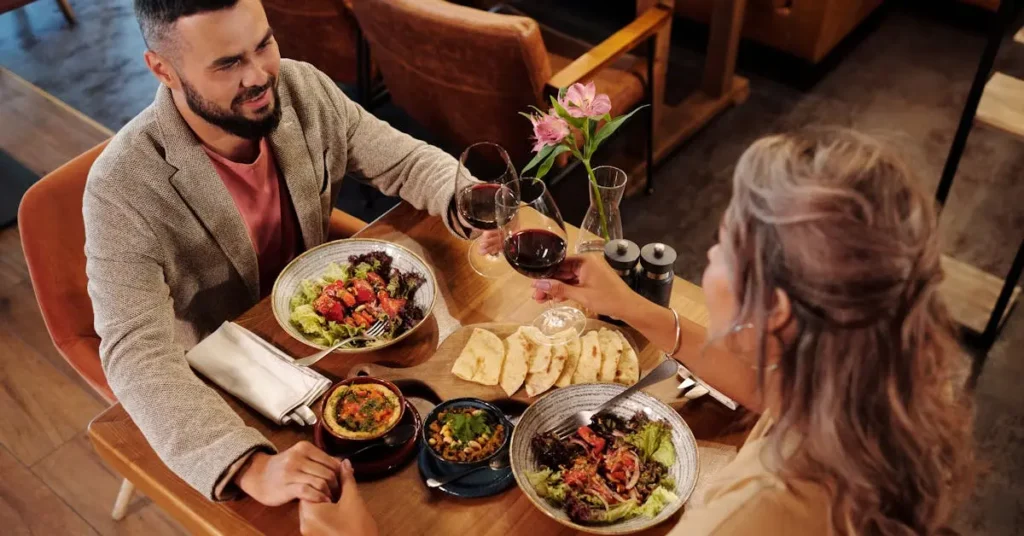
There’s a quiet shift happening in how some restaurants think about food. It’s not loud or flashy like molecular gastronomy or fusion menus. In fact, it’s almost the opposite—simpler, slower, more grounded. Chefs are starting to look closer to home, quite literally, when sourcing their ingredients.
And once you notice it, you can’t unsee it. That subtle change in taste, the freshness of a tomato, the way seasonal dishes actually feel… seasonal. It all points back to one idea: proximity matters.
What “Local” Really Means Now
We’ve all heard the term “farm-to-table,” but hyperlocal sourcing takes it a step further. It’s not just about sourcing within a region or state—it’s about sourcing from within the immediate vicinity. Sometimes even within a few kilometers.
Keep exploringFrom Chai Breaks to Kombucha Sips: India’s Quiet Shift Toward Functional Beverages
That could mean vegetables from a nearby farm, herbs grown on the restaurant’s rooftop, or dairy sourced from a local supplier you could practically visit on your day off.
At first glance, it sounds like a romantic concept. But it’s quickly becoming a practical one too.
Why Chefs Are Paying Attention
Ask any chef, and they’ll tell you—ingredients are everything. You can have all the skill in the world, but if your raw materials aren’t fresh or flavorful, there’s only so much you can do.
Keep exploringFrom Tables to Takeaways: How Food Businesses Are Quietly Redefining Success
Hyperlocal sourcing changes that equation. Ingredients travel less, which means they retain more of their natural taste and texture. There’s less need for preservatives, less time spent in storage, and often, a better understanding of how the food was grown.
This is where the idea of Hyperlocal food sourcing kya hota hai aur restaurants ke liye kyun important hai? starts to make sense beyond just a buzzword. It’s not just about being trendy—it’s about elevating the core of what a restaurant offers.
The Sustainability Angle (Without the Preaching)
Let’s be honest—sustainability can sometimes feel like an overused word. But in this context, it’s hard to ignore.
Keep exploringImmersive Food Activation Events for Brand Impacts
When ingredients are sourced locally, transportation emissions drop. Packaging requirements reduce. Food waste can be managed more efficiently because supply chains are shorter and more predictable.
But interestingly, many restaurants aren’t leading with sustainability as their main message. It’s almost a byproduct of a better system, rather than the headline.
And maybe that’s why it works—it feels natural, not forced.
Building Relationships, Not Just Supply Chains
One of the less talked-about aspects of hyperlocal sourcing is the relationship it creates between chefs and producers.
Instead of dealing with anonymous distributors, restaurants often work directly with farmers, growers, and small suppliers. There’s conversation, feedback, sometimes even collaboration.
A chef might request a specific variety of herb. A farmer might suggest a seasonal ingredient that’s at its peak. It becomes a two-way exchange, not just a transaction.
And that connection often reflects in the food itself—subtly, but noticeably.
The Challenges No One Talks About
Of course, it’s not all smooth sailing. Hyperlocal sourcing comes with its own set of challenges.
Availability can be inconsistent. Weather affects supply. Scaling becomes tricky, especially for larger restaurants or chains. And sometimes, costs can be higher compared to bulk sourcing from larger distributors.
There’s also the question of variety. Local sourcing means working within what’s available in a specific region, which can limit menu options.
But for many restaurants, these challenges are part of the trade-off. They force creativity. They push chefs to think differently.
Customers Are Starting to Care
There was a time when diners didn’t really think about where their food came from. Taste and price were the primary factors.
Now, there’s a growing curiosity. People ask questions. They read menus more carefully. They notice when a dish highlights local ingredients.
It’s not universal—plenty of diners still prioritize convenience and cost—but the awareness is growing. And restaurants that embrace hyperlocal sourcing often find that it resonates with a certain segment of their audience.
A Different Kind of Dining Experience
There’s something intangible about eating food that’s been sourced nearby. It feels more connected, somehow. More real.
Maybe it’s the freshness. Maybe it’s the story behind the ingredients. Or maybe it’s just the idea that what you’re eating hasn’t traveled halfway across the country to reach your plate.
Whatever it is, it adds a layer to the dining experience that’s hard to replicate.
Where This Is Heading
Hyperlocal sourcing isn’t going to replace traditional supply chains entirely. It’s not practical for every restaurant, every cuisine, or every location.
But it doesn’t have to.
Even small steps—like sourcing a few key ingredients locally—can make a difference. And as more restaurants experiment with this approach, we’ll likely see new models emerge. Hybrid systems, seasonal menus, even urban farming integrations.
It’s an evolving space, and that’s what makes it interesting.
Final Thoughts
In the end, hyperlocal food sourcing isn’t just about geography. It’s about intention. About choosing to work with what’s around you, rather than defaulting to what’s easiest.
It asks restaurants to slow down a little, to pay attention, to build connections—not just with their ingredients, but with the people behind them.
And for diners, it offers something simple but meaningful: food that feels a little closer to home, in every sense of the word.