There was a time—not even that long ago—when gaming felt oddly divided. You had your console friends, your PC friends, and maybe a cousin who swore mobile gaming was the future. And somehow, none of them could play together. It wasn’t just about preference; it was about walls. Invisible, frustrating walls.
Then, slowly, those walls started to crack.
When Platforms Stopped Being Borders
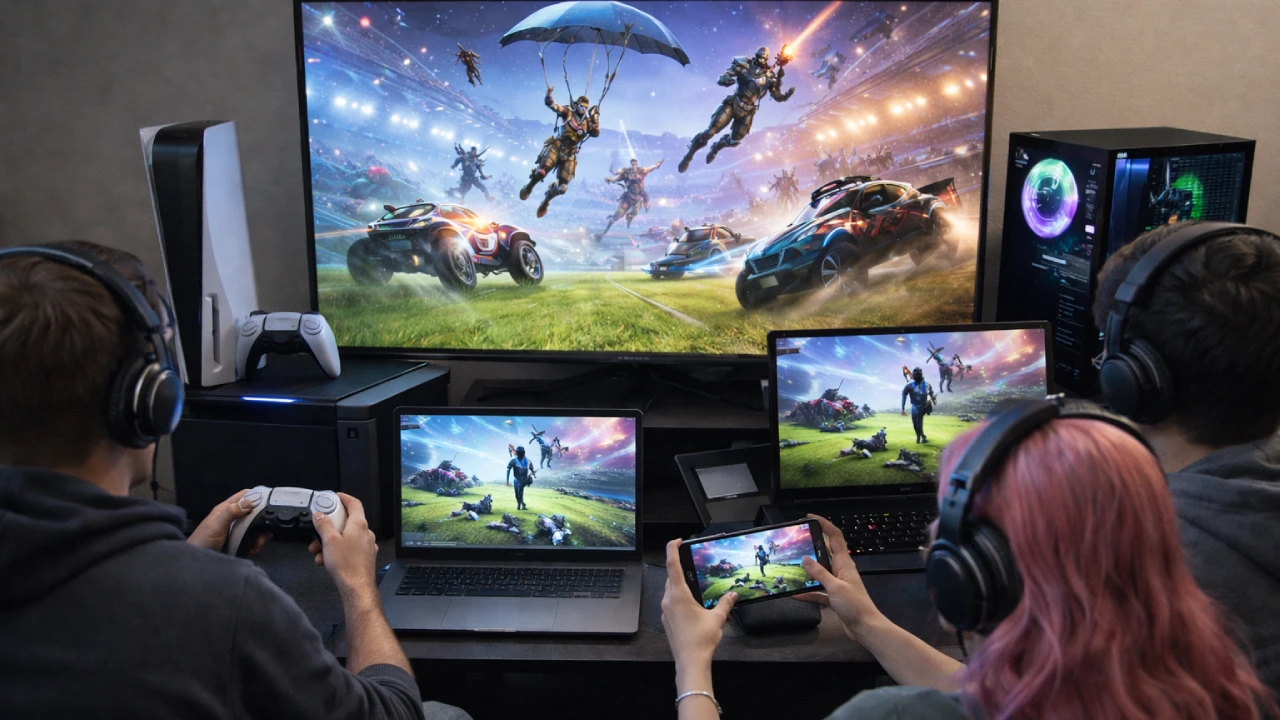
Cross-platform gaming didn’t arrive with a bang. It sort of… slipped in. A few games experimented with it, cautiously. Players noticed. Suddenly, someone on a PlayStation could team up with a friend on a PC. A mobile player could jump into the same match as someone using a console.
It felt small at first, but the impact? Huge.
Because gaming, at its core, isn’t just about mechanics or graphics. It’s about people. And when you remove barriers between people, everything changes.
Keep exploringWhen Worlds Build Themselves: The Subtle Rise of AI in Game Design
Cross-platform gaming ka rise aur players ke experience par iska impact
The rise of cross-platform gaming isn’t just a technical upgrade—it’s a cultural shift. It changes who you play with, how often you play, and even why you log in.
Before this, your gaming circle was limited by hardware. If your friend didn’t own the same console or system, that was it. You played separately, maybe talked about the game later.
Now, the hardware matters less. What matters is the connection.
And that subtle shift has made gaming feel more inclusive, more social, and honestly… more fun.
Keep exploringSatta Matka: Understanding Its History, Online Popularity, and Risks
The Social Side Got Stronger
Let’s be real—most people don’t stick with a game forever just because it’s “good.” They stay because their friends are there.
Cross-platform play makes it easier to keep those connections alive. No more convincing someone to switch consoles or upgrade their setup. You meet in the middle.
It also changes how new communities form. Players from different ecosystems mix, share strategies, build friendships. The game becomes a shared space rather than a segmented one.
Keep exploringFrom Livestreams to Long-Term Brands: How Gaming Influencers Are Rethinking Income
And that sense of shared space? It’s powerful.
A Bigger Player Base, A Better Experience
There’s also a practical advantage. When games support cross-platform play, the player pool expands. Matchmaking becomes faster. Skill-based systems work more effectively. You’re less likely to wait endlessly for a match.
For developers, this is gold. A unified player base means longer game lifespans, more engagement, and a stronger community.
But for players, it’s simpler—it just feels smoother. Less waiting, more playing.
Not Without Its Challenges
Of course, it’s not perfect. Nothing ever is.
Balancing gameplay across platforms can be tricky. A player using a mouse and keyboard might have an edge over someone on a controller. Mobile players face entirely different limitations. Developers have to constantly tweak mechanics to keep things fair.
Keep exploringUnderstanding Regional Number-Based Gambling Terms and Their Context
Then there’s the technical side—synchronizing updates, managing servers, ensuring compatibility across different systems. It’s a complex dance happening behind the scenes.
And yet, despite all that, the industry keeps moving in this direction. That says something.
The Business Angle Nobody Talks About Enough
Cross-platform gaming isn’t just about player experience—it’s also reshaping how games are marketed and monetized.
When a game isn’t tied to a single platform, its reach expands dramatically. Players can join from anywhere, on any device. That opens up new revenue streams, from in-game purchases to seasonal content.
It also shifts the focus from hardware sales to game ecosystems. The game itself becomes the central product, not the platform it runs on.
What It Means for the Future
If you look ahead, it’s hard to imagine a gaming world that goes back to strict platform boundaries. Players have tasted the freedom of cross-play, and it’s not something they’ll easily give up.
We’re already seeing hints of what’s next—cross-progression, where your progress carries across devices. Cloud gaming, where the platform becomes almost irrelevant. A future where you start a game on your phone, continue on your laptop, and finish on your console.
It’s not fully here yet, but it’s close.
Final Thoughts
Cross-platform gaming didn’t just make games more accessible—it made them more human.
It brought people together who would’ve otherwise stayed in separate corners of the gaming world. It made it easier to share experiences, to collaborate, to compete.
And maybe that’s the real story here. Not the technology, not the business strategies—but the simple idea that playing together should be easy.
Because at the end of the day, games are better when they’re shared.