Water is one of those household essentials that tends to disappear into the background. We notice it when something goes wrong—a strange taste, hard-water scale, low pressure, or an unpleasant smell—but otherwise, the taps simply work and life carries on.
Still, the quality of your home’s water can affect much more than what comes out of the kitchen faucet. It can influence appliances, plumbing, laundry, showers and everyday comfort. That’s why choosing the right treatment equipment deserves a little more thought than simply buying the first filter you see online.
Every Home Has Different Water Needs
There isn’t one perfect solution for every property. Water sources vary, household sizes vary, and the problems homeowners experience can be completely different.
Keep exploringWhat Your Tap Water Is Telling You: A Simple Guide to Better Water Quality
A municipal supply might have a noticeable chlorine taste, while a private well could have iron, hardness, sediment or microbiological concerns. Even homes in the same neighborhood may need different approaches.
Before shopping for equipment, consider having the water tested. A basic analysis can help identify hardness, pH, chlorine and other characteristics that may influence your treatment choices.
It’s a much better starting point than guessing.
What Are Residential Water Products?
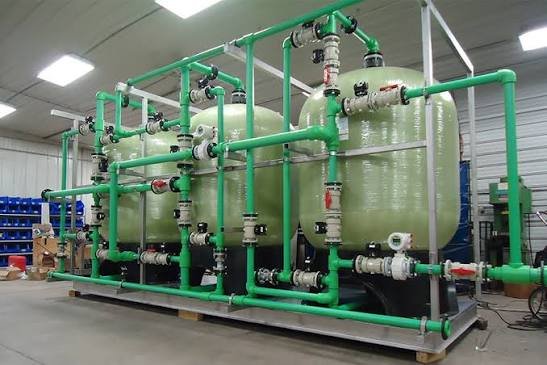
The term residential products can cover a wide range of equipment designed for use in homes. Depending on the water problem, this may include sediment filters, activated carbon filters, softeners, iron-removal equipment, UV disinfection units, reverse osmosis systems and other treatment technologies.
Each product has a specific job.
A sediment filter can capture particles. Carbon filtration can help improve certain tastes and odors. A softener is primarily intended to reduce hardness minerals. Reverse osmosis can reduce many dissolved substances, while UV treatment is commonly used for microbiological disinfection.
Keep exploringHow Water Quality Can Affect the Comfort of Everyday Life
Understanding these differences can save you from buying equipment that doesn’t actually address your problem.
Whole-House or Point-of-Use?
One of the first decisions is where treatment should happen.
A point-of-use system treats water at a specific outlet, usually for drinking and cooking. Reverse osmosis systems are commonly installed this way.
Keep exploringHow Better Water Filtration Can Keep Commercial Businesses Running Smoothly
A whole-house setup treats water as it enters the property, which means multiple taps and fixtures can receive treated water.
Neither approach is automatically better. If you’re mainly concerned about drinking-water taste, a kitchen filter may be sufficient. If the entire home’s supply contains a problem such as sediment or excessive hardness, whole-house treatment may be more practical.
Finding the Right Water Treatment System
Choosing a water treatment system should begin with the water itself.
Ask what you want to improve. Is it scale? Taste? Odor? Iron staining? Microorganisms? A specific contaminant identified by testing?
Keep exploringBuilding Better Water Solutions: How Smart Choices Improve Everyday Water Experiences
Once the issue is clear, compare technologies that are actually designed to address it.
It can be tempting to choose a system with the longest list of features, but more features don’t necessarily mean better treatment. An oversized or unnecessarily complicated system can cost more to install and maintain without providing a meaningful benefit.
Sometimes a simple solution is exactly what you need.
Think About Flow Rate
Flow rate is an easy detail to overlook.
A treatment system needs to supply enough water for your household during periods of normal use. If several showers, faucets or appliances are operating at the same time, an undersized system may cause noticeable pressure or flow problems.
When comparing equipment, check the recommended flow rate and household capacity.
A professional installer can also help determine the appropriate size based on your plumbing and typical water consumption.
Keep exploringWhy the Right Water Solution Makes a Bigger Difference Than Most Homeowners Expect
Don’t Ignore Operating Costs
The purchase price is only part of the story.
Filters need replacement. Some systems require salt, electricity, wastewater or periodic professional servicing. Certain components may also have limited lifespans.
Before buying, ask about the ongoing costs. Find out how frequently filters need changing and whether replacement parts are easy to obtain.
A system that costs slightly more upfront but is inexpensive and straightforward to maintain may ultimately be the more economical choice.
Quality Installation Makes a Difference
Even excellent equipment can perform poorly if it isn’t installed correctly.
Incorrect plumbing connections, inadequate pressure, poor sizing or insufficient pre-filtration can all affect system performance.
Professional installation can help ensure that the equipment is integrated properly into your home’s water supply. It can also make future servicing easier.
If you’re comparing installers, ask whether they explain the system’s operation and maintenance requirements after installation. That’s a small detail, but a useful one.
Maintenance Keeps the System Working
Water treatment equipment needs attention from time to time.
Replace filters when recommended, inspect for leaks and follow the manufacturer’s maintenance schedule. If water taste, pressure or appearance suddenly changes, don’t ignore it.
A small issue may be easy to fix when caught early. Left alone, it can sometimes become a much more expensive problem.
Good maintenance also protects the investment you’ve already made.
Make Your Choice Based on Facts
There’s no need to turn water treatment into a complicated project.
Start with testing. Identify the actual problem. Decide whether you need point-of-use or whole-house treatment, then compare equipment based on performance, flow rate, maintenance and long-term cost.
The right water systems should quietly make life easier rather than becoming another source of household frustration.
Whether you need better-tasting drinking water, protection from hard-water scale, reduction of sediment or a more specialized treatment solution, the goal remains the same: choose equipment that fits your home’s water and the way your family actually uses it.
A little research today can make a noticeable difference every time you turn on the tap tomorrow.