Most people don’t think much about their household water until something feels off. Maybe the faucet has developed a stubborn white ring. Perhaps the shower glass never seems to stay clean, or your morning coffee tastes different than it used to. These little changes can be easy to ignore, especially when the water still looks perfectly clear.
But appearance doesn’t tell the whole story.
Water contains naturally occurring minerals and, depending on its source, may also contain sediment, microorganisms, metals, or other substances. Some affect taste and comfort, while others may deserve more serious attention. The sensible way to understand what’s happening is to test the water rather than make assumptions.
A little information can go a long way.
Why Testing Your Water Is a Smart First Step
A complimentary water test can be a useful starting point for homeowners who aren’t sure what is causing their water problems.
Some water-treatment companies offer basic testing at no charge, often checking common characteristics such as hardness, pH, iron, or other indicators. It can give homeowners a general idea of what may be happening and whether further testing is worthwhile.
Keep exploringBetter Water Starts With Better Treatment: Understanding Chlorine, Chloramines and Corrosive Water
Still, it’s important to understand the limits of any free or complimentary test. A basic screening isn’t necessarily the same as a certified laboratory analysis. If you’re concerned about a specific contaminant, particularly one that could affect health, more comprehensive testing may be appropriate.
The important thing is to know what the test measures before making treatment decisions based on it.
What Total Dissolved Solids Tell You
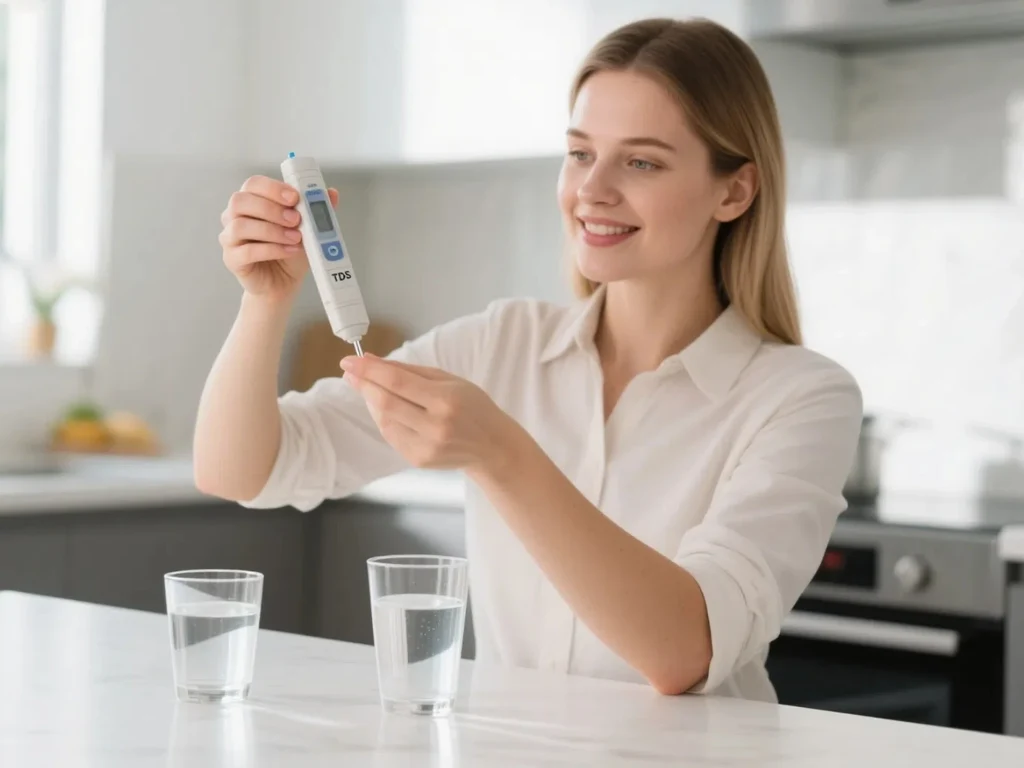
One measurement that often appears on water reports is total dissolved solids, commonly shortened to TDS.
TDS represents the combined concentration of dissolved substances in water, including minerals, salts, and other dissolved materials. It can be useful as a general indicator of the amount of dissolved material present.
Keep exploringWhy Clean Water Is One of the Best Investments You Can Make for Your Home
But there’s a common misunderstanding here: a high TDS reading doesn’t automatically mean the water is unsafe.
Different dissolved substances have different implications, and TDS doesn’t identify exactly which substances are responsible for the reading. That’s why it should be considered one piece of the larger water-quality picture.
If TDS changes significantly over time, however, it can be worth investigating why.
Understanding Hardness in Household Water
Hardness is one of the most common water-quality concerns homeowners encounter.
Hard water contains elevated amounts of calcium and magnesium. These minerals aren’t necessarily harmful at typical concentrations, but they can be frustrating around the house.
Keep exploringWhen a Water Softener Needs Attention: Installation, Repairs, and Maintenance
You might notice white deposits on faucets, cloudy shower doors, spots on dishes, or soap that doesn’t seem to rinse away properly. Over time, mineral scale can also accumulate inside water heaters and appliances.
A water softener can help manage hardness by reducing calcium and magnesium through an ion-exchange process.
However, a standard carbon filter isn’t a substitute for a water softener. Each technology has a different purpose, which is why identifying the actual problem first is so important.
Keep exploringWhy the Right Water Solution Makes a Bigger Difference Than Most Homeowners Expect
Why Clear Water Isn’t Always Better Water
It’s natural to trust what we can see. If water comes out of the tap clear, it feels reassuring.
Unfortunately, many water-quality issues aren’t visible.
Dissolved minerals, certain metals, nitrates, and microorganisms may be present without changing the color or smell of the water. A clear glass therefore doesn’t necessarily tell you everything you need to know.
This is particularly important for private well owners. Groundwater chemistry depends heavily on local geology and surrounding conditions. Two wells located relatively close together can sometimes have noticeably different water characteristics.
Keep exploringChoosing the Right Water System for a More Comfortable Home
Testing helps replace assumptions with useful information.
Water Quality Can Affect Your Whole House
Water isn’t only used for drinking.
The same supply runs through your shower, washing machine, dishwasher, water heater, bathroom fixtures, and kitchen appliances. That’s why certain water-quality problems can become expensive or annoying over time.
Hard water may contribute to scale. Iron can leave orange stains on laundry and plumbing fixtures. Sediment can clog faucet aerators. Certain odors can make showers or cooking less pleasant.
This doesn’t mean every home needs a whole-house treatment system. It simply means water quality should be considered as part of the broader household environment.
Choosing the Right Treatment
Once you know what’s in the water, treatment options become much easier to evaluate.
Sediment filters are designed to capture suspended particles. Activated carbon can reduce chlorine and certain compounds that affect taste and odor. Water softeners are primarily used for hardness. Reverse osmosis systems can reduce many dissolved substances at specific points of use.
For microbial concerns, ultraviolet treatment or appropriate disinfection methods may be considered.
The important thing is matching the technology to the problem.
Buying a filter because it’s popular or heavily advertised doesn’t guarantee that it will improve your particular water. Water chemistry varies, and treatment should reflect those differences.
Private Well Owners Should Pay Special Attention
If your home relies on a private well, you’re responsible for monitoring the water supply.
That doesn’t mean testing needs to become a constant chore. Establishing a baseline and checking the water periodically can provide valuable peace of mind.
Additional testing may be sensible after flooding, major well repairs, nearby construction, or noticeable changes in taste, odor, or appearance.
Regular monitoring can also reveal gradual changes that might otherwise go unnoticed.
Maintenance Is Part of Good Water Treatment
Installing treatment equipment is only half the job.
Filters eventually need replacement. Water softeners need appropriate salt levels and servicing. Reverse osmosis membranes have a limited lifespan. UV systems require maintenance to remain effective.
Skipping routine maintenance can reduce performance and make an otherwise excellent system less useful.
A simple maintenance calendar can help. Write down filter replacement dates, service appointments, and test results. It takes only a few minutes, but it makes it much easier to keep track of the system.
Don’t Let Water Testing Become Guesswork
Water testing can seem technical at first, especially when reports contain unfamiliar terms and numbers. But you don’t need to understand every chemical measurement to make a sensible decision.
Start with your water source and the problems you’ve actually noticed. Look at the test results that relate to those concerns. If something is unclear, ask a qualified professional or laboratory to explain it.
Most importantly, don’t assume that one number tells the entire story.
Water quality is a combination of many factors.
A Better Approach Starts With Knowing Your Water
There is no universal water-treatment system that fits every household. Some homes may need nothing more than a basic filter. Others may benefit from softening, sediment filtration, reverse osmosis, or specialized treatment.
The smartest approach is to understand the water first.
A complimentary screening can be a useful beginning, while comprehensive testing may be appropriate when specific concerns arise. From there, the right treatment becomes a practical decision rather than a guessing game.
At the end of the day, good water management isn’t about buying the most equipment. It’s about knowing what your household water needs and choosing a solution that makes sense.
Sometimes, a little testing is all it takes to turn a nagging water problem into a clear, manageable one.